a mycological building and degrading process
- Years: 2022 - 2024
- Location: Nyon (CH), Brussels (BE), Bochum (DE)
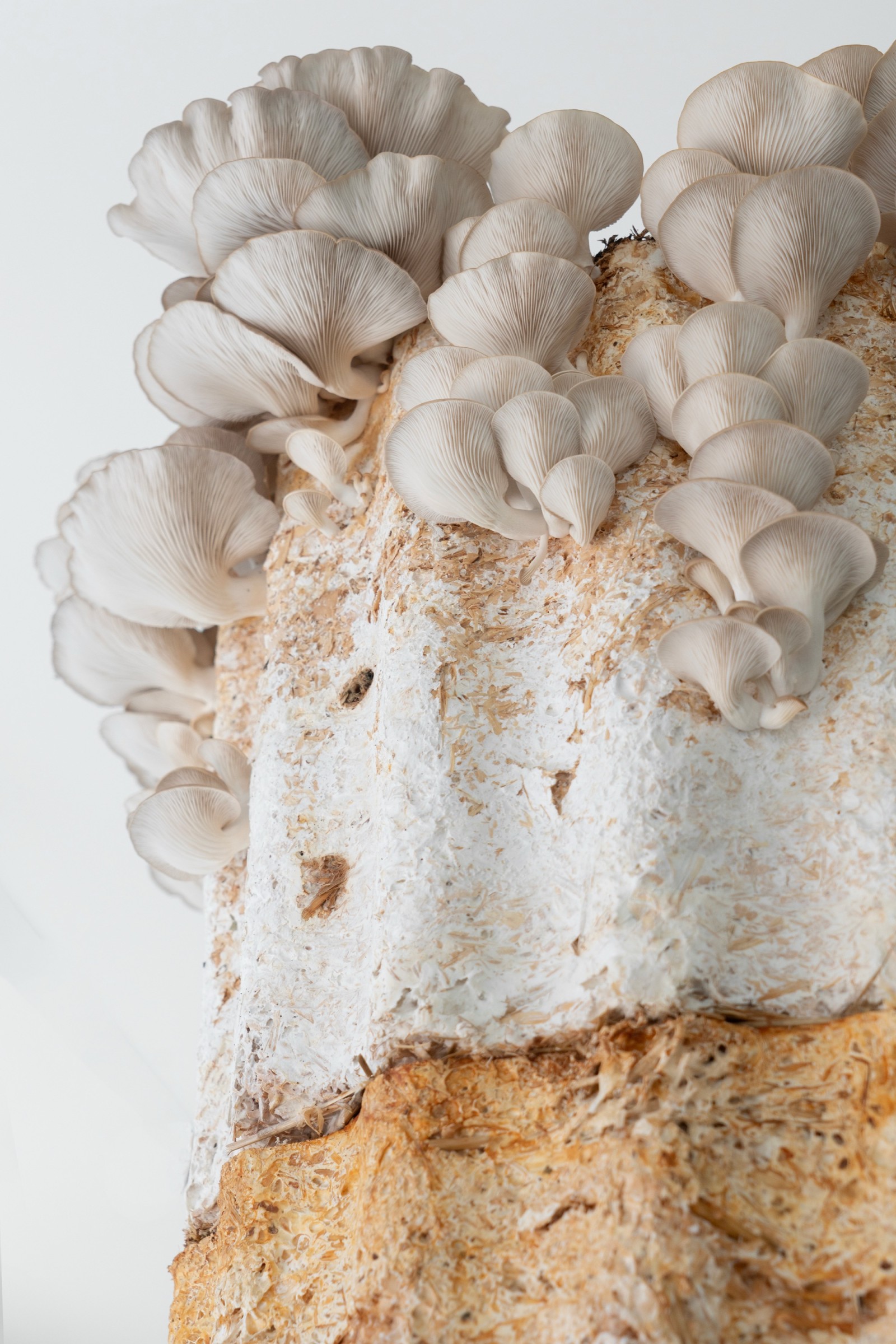
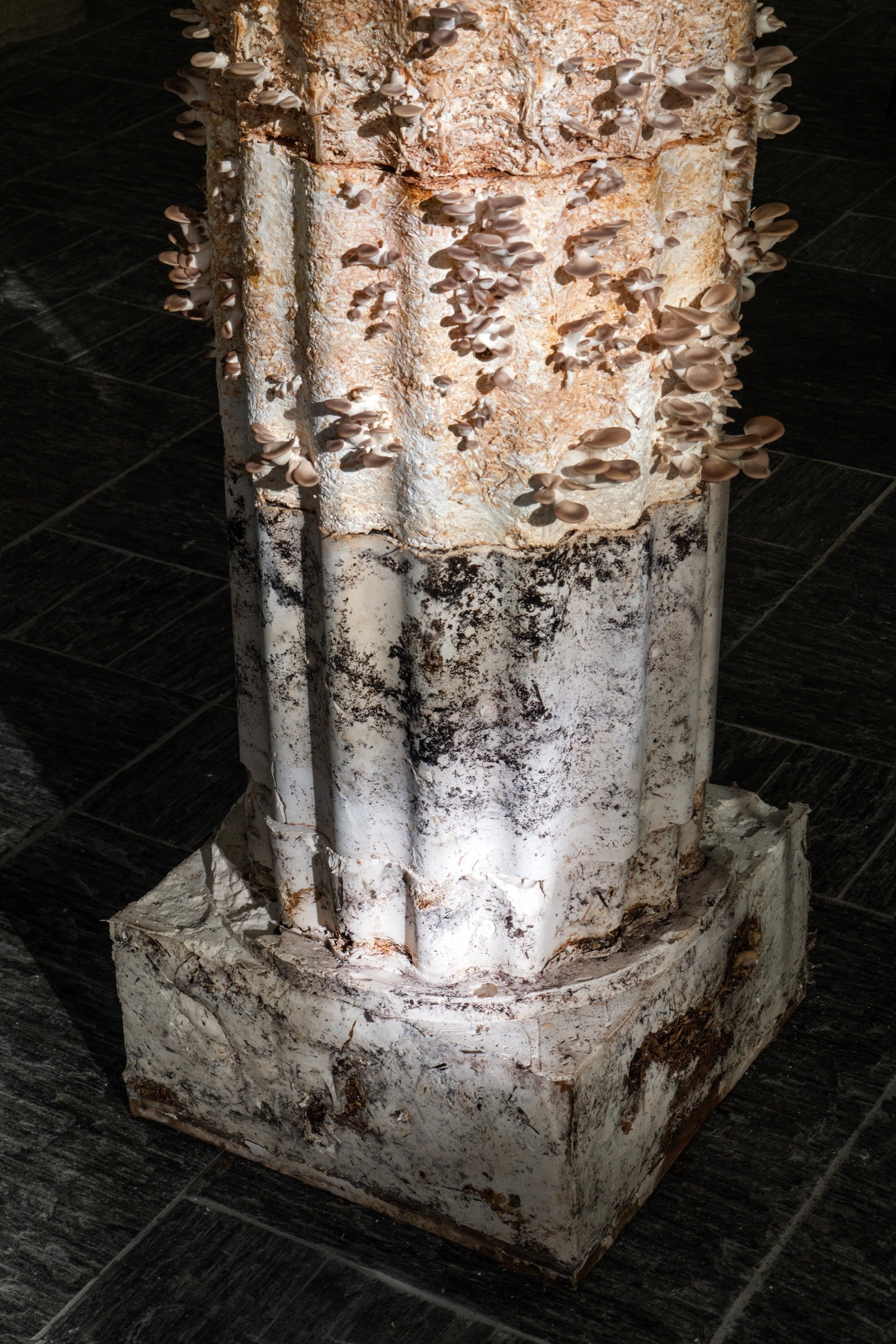
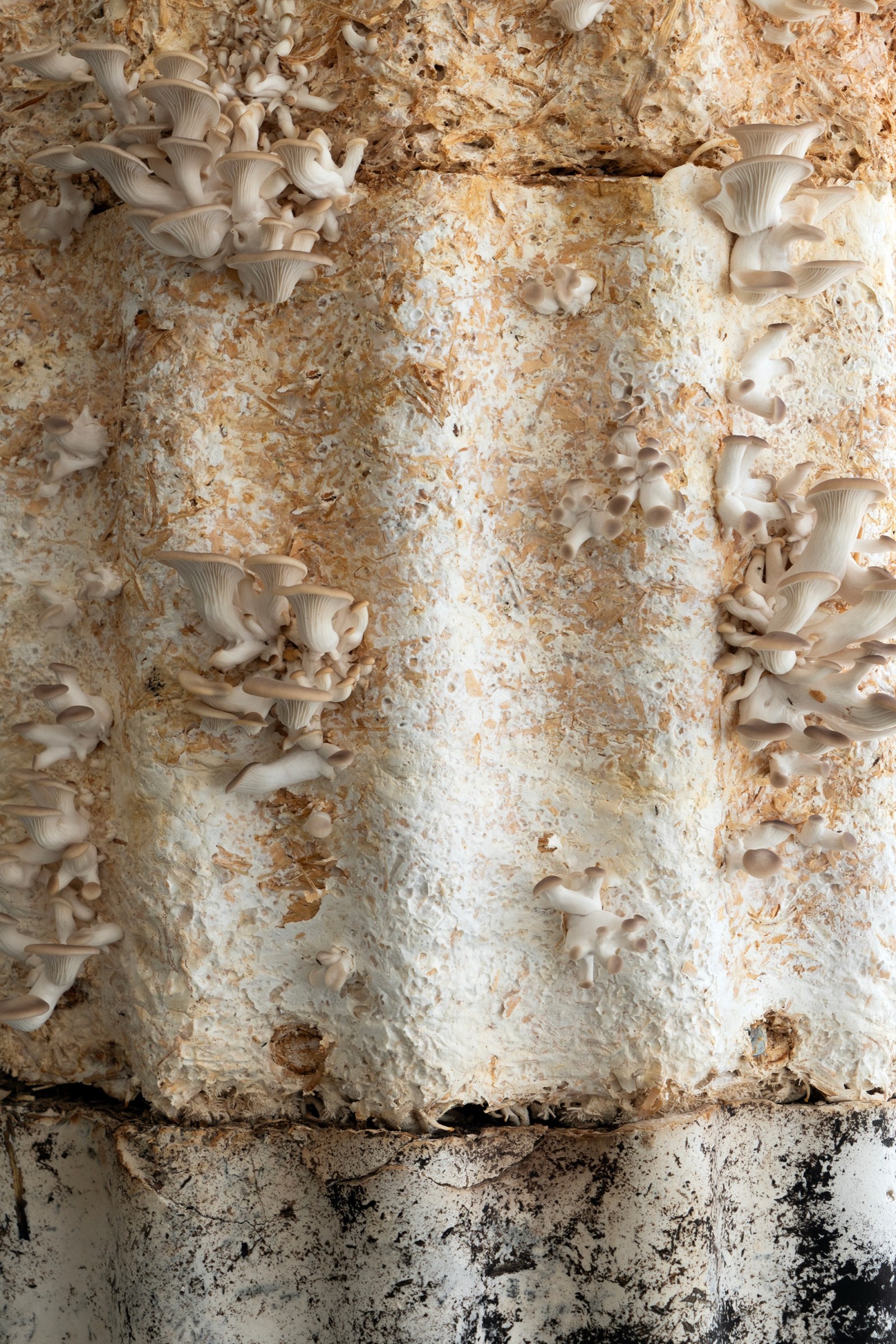
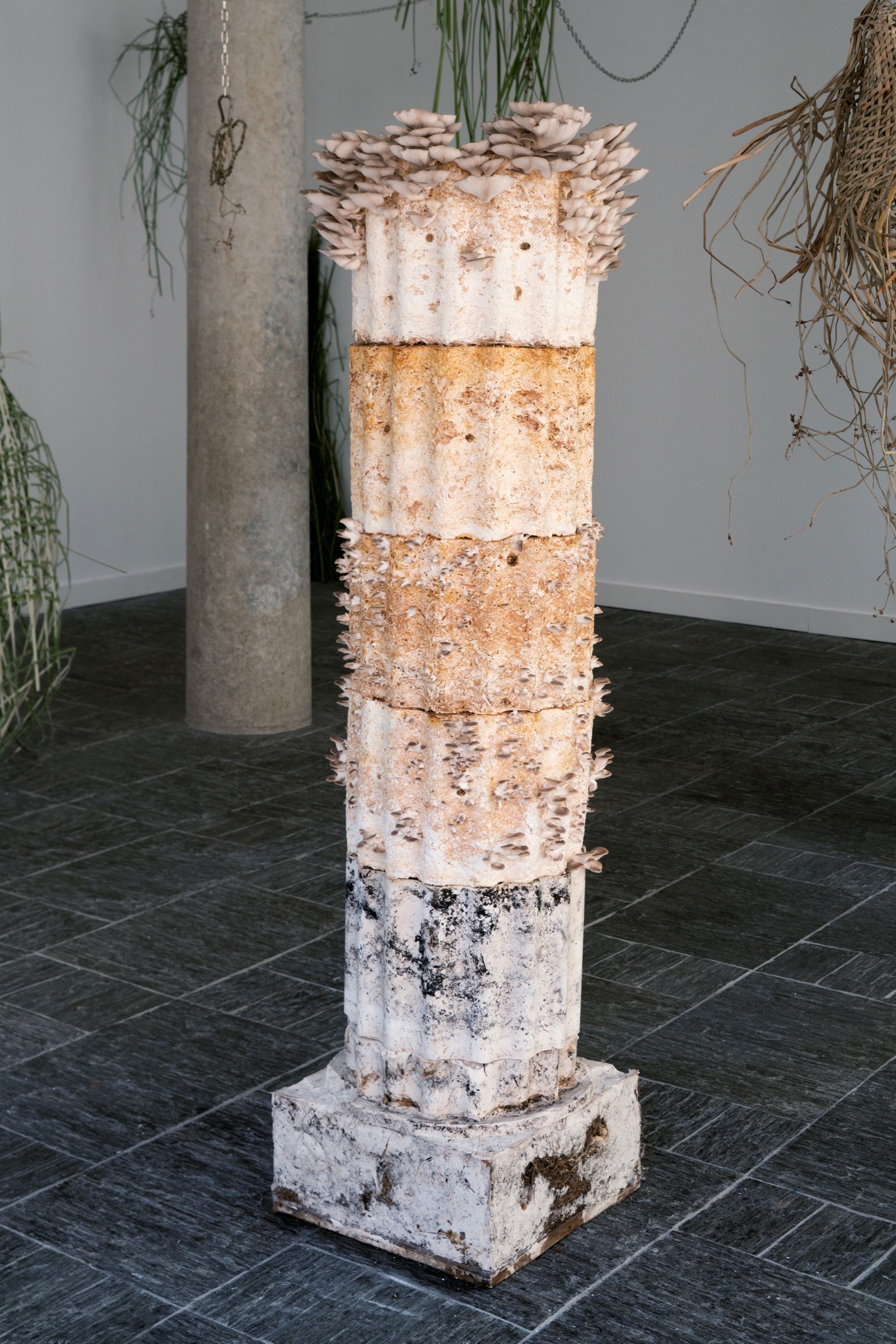
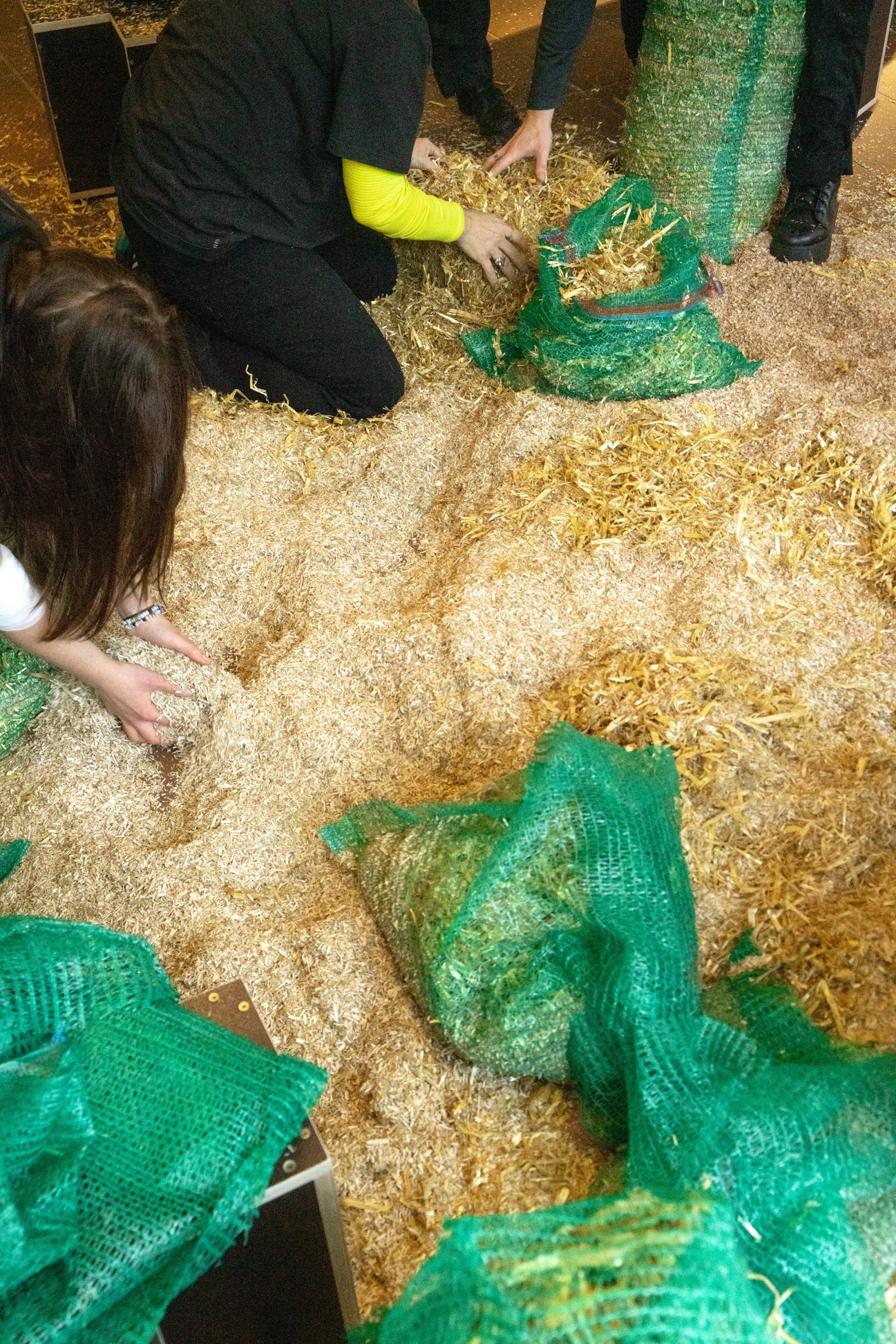
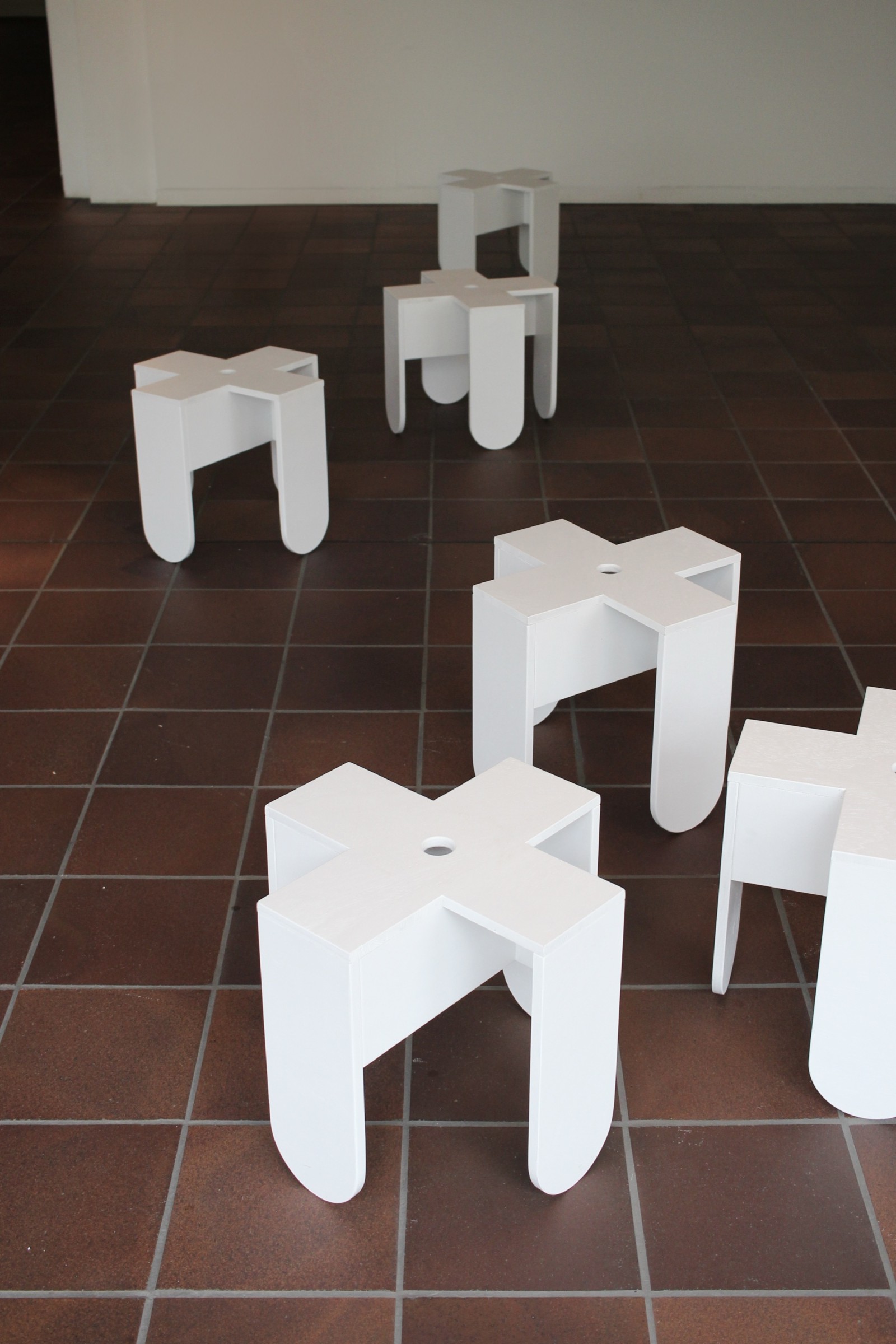
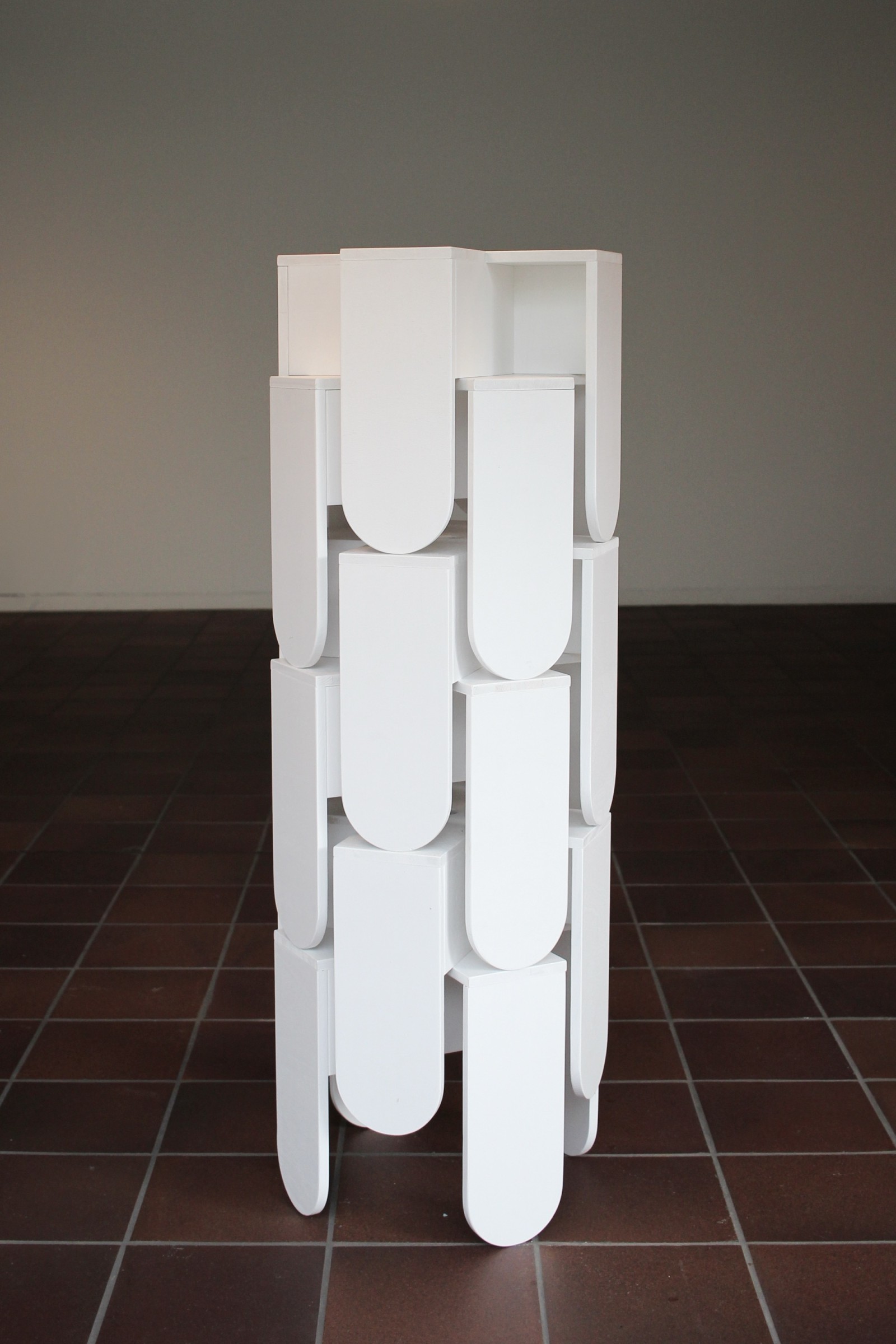
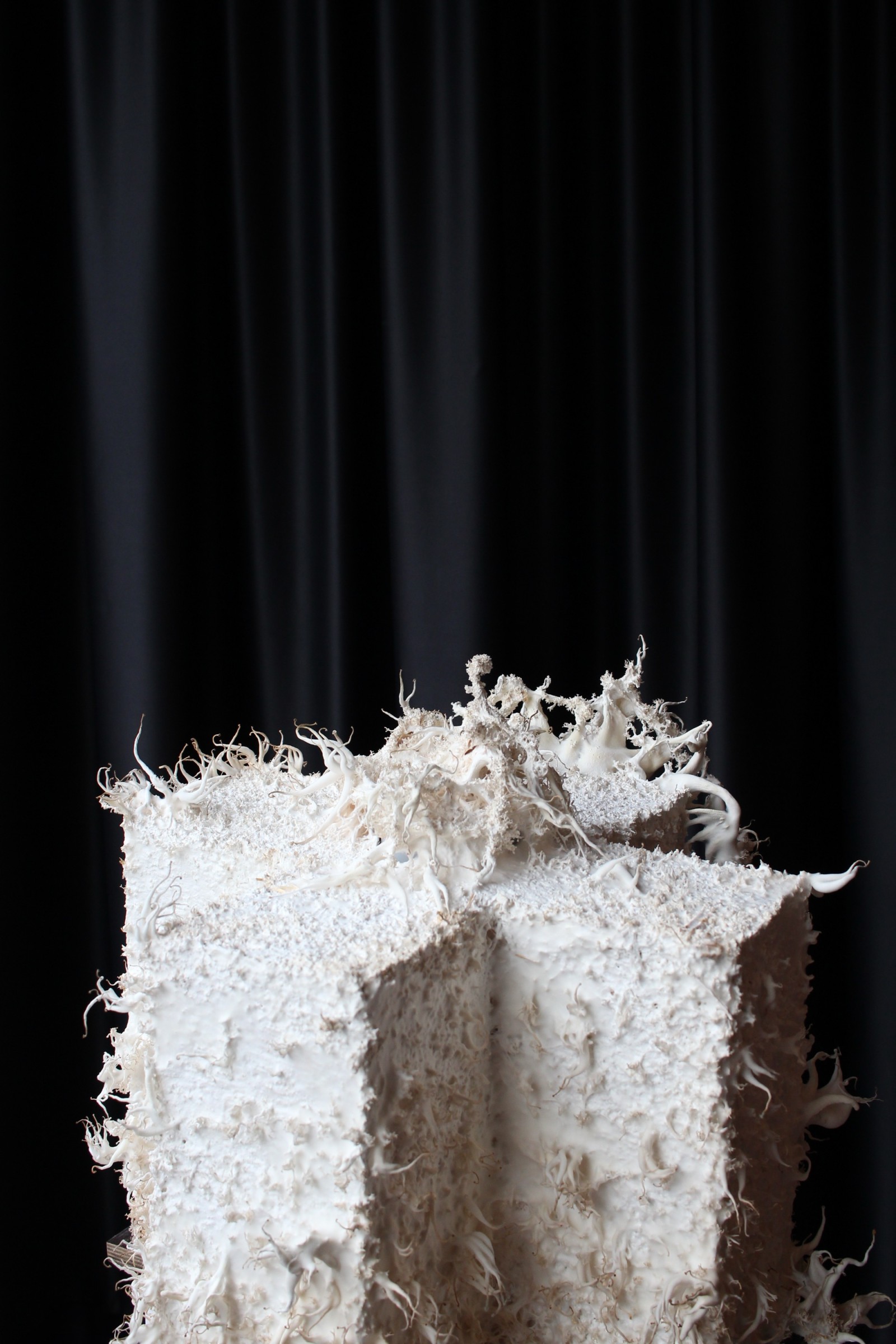
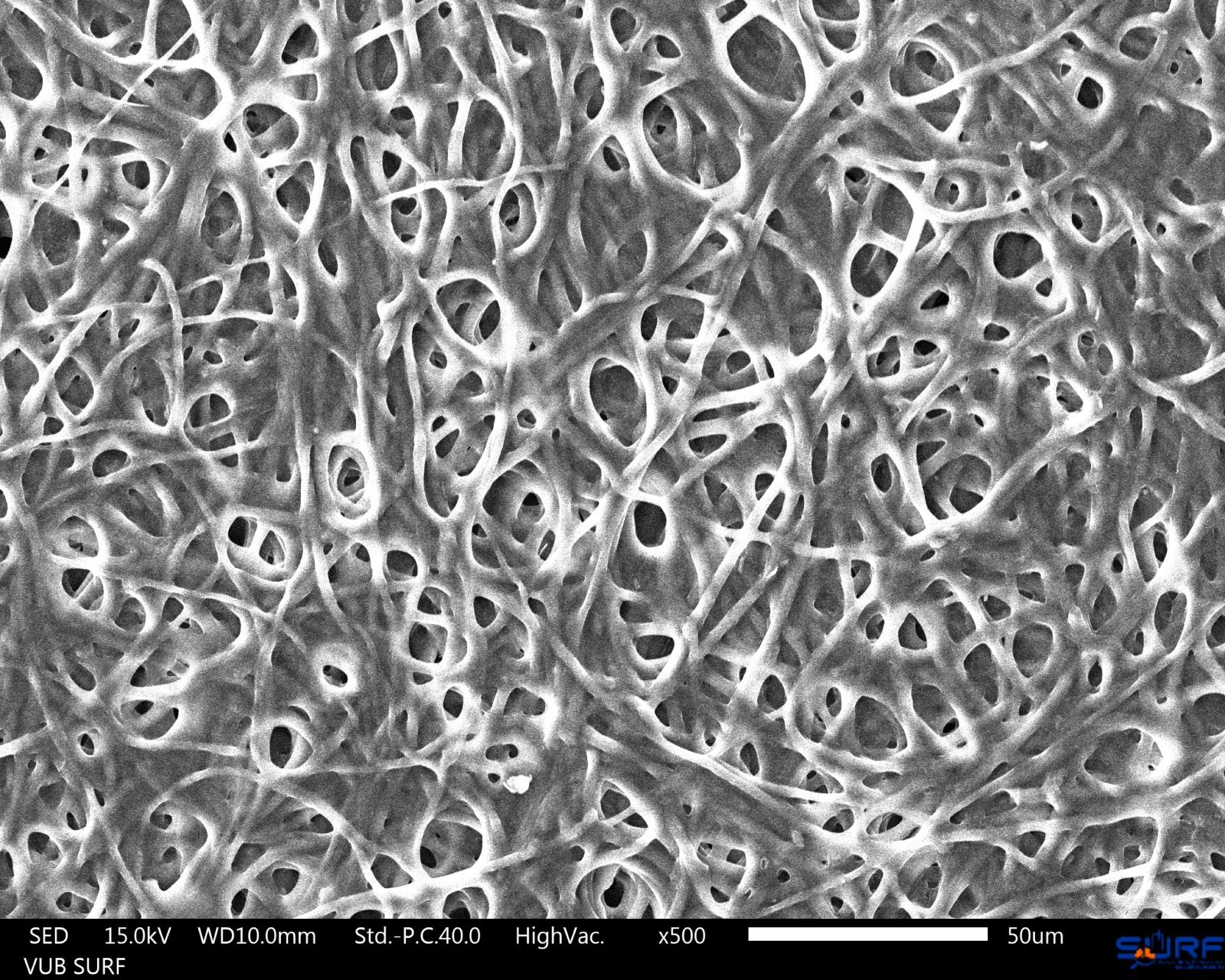
"We are stuck with the problem of living despite economic and ecological ruination. Neither tales of progress nor of ruin tell us how to think about collaborative survival. It is time to pay attention to mushroom picking. Not that this will save us-but it might open our imagination."
Tsing, Anna Lowenhaupt. The Mushroom at the End of the World: On the Possibility of Life in Capitalist Ruins. Princeton University Press, 2015.
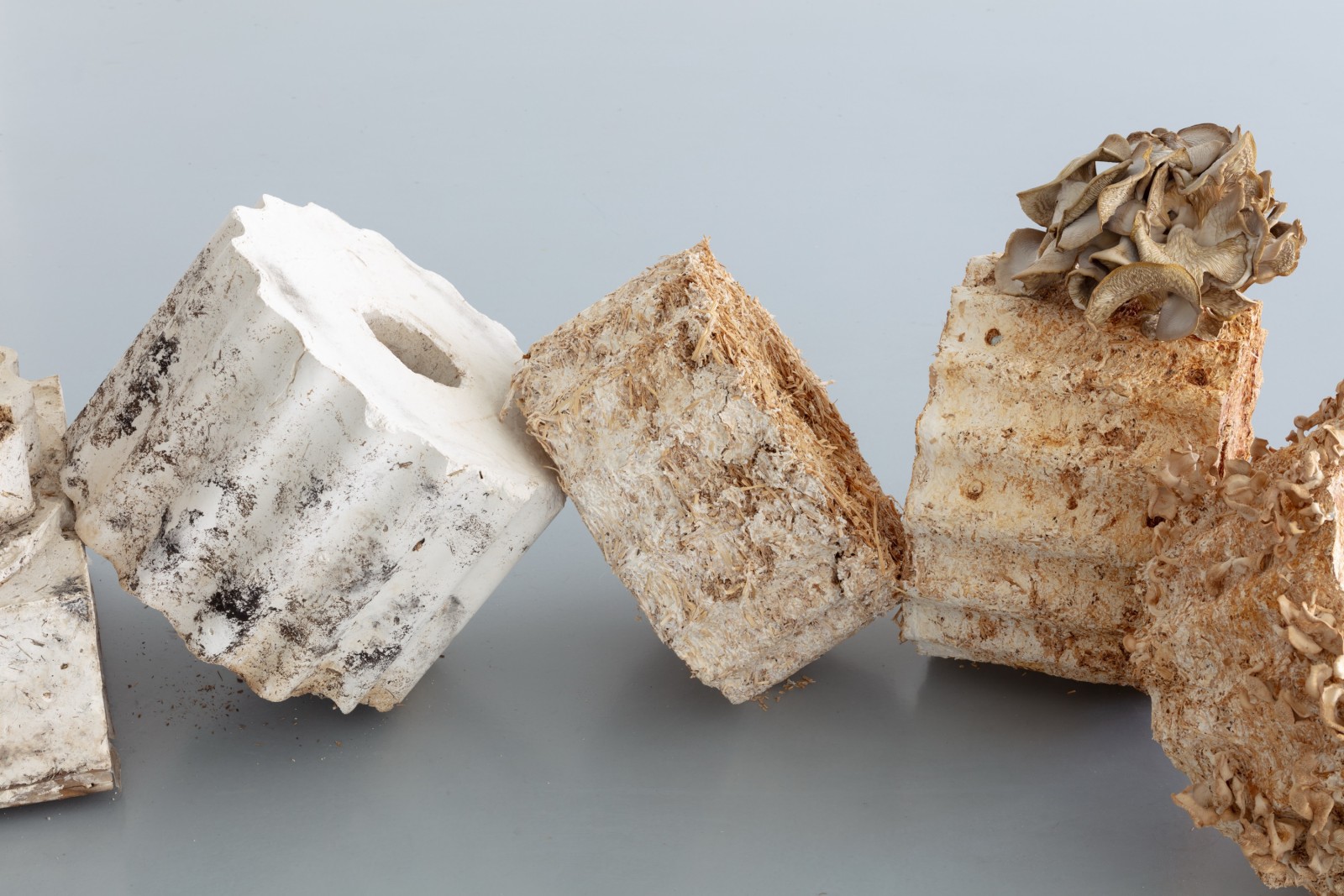
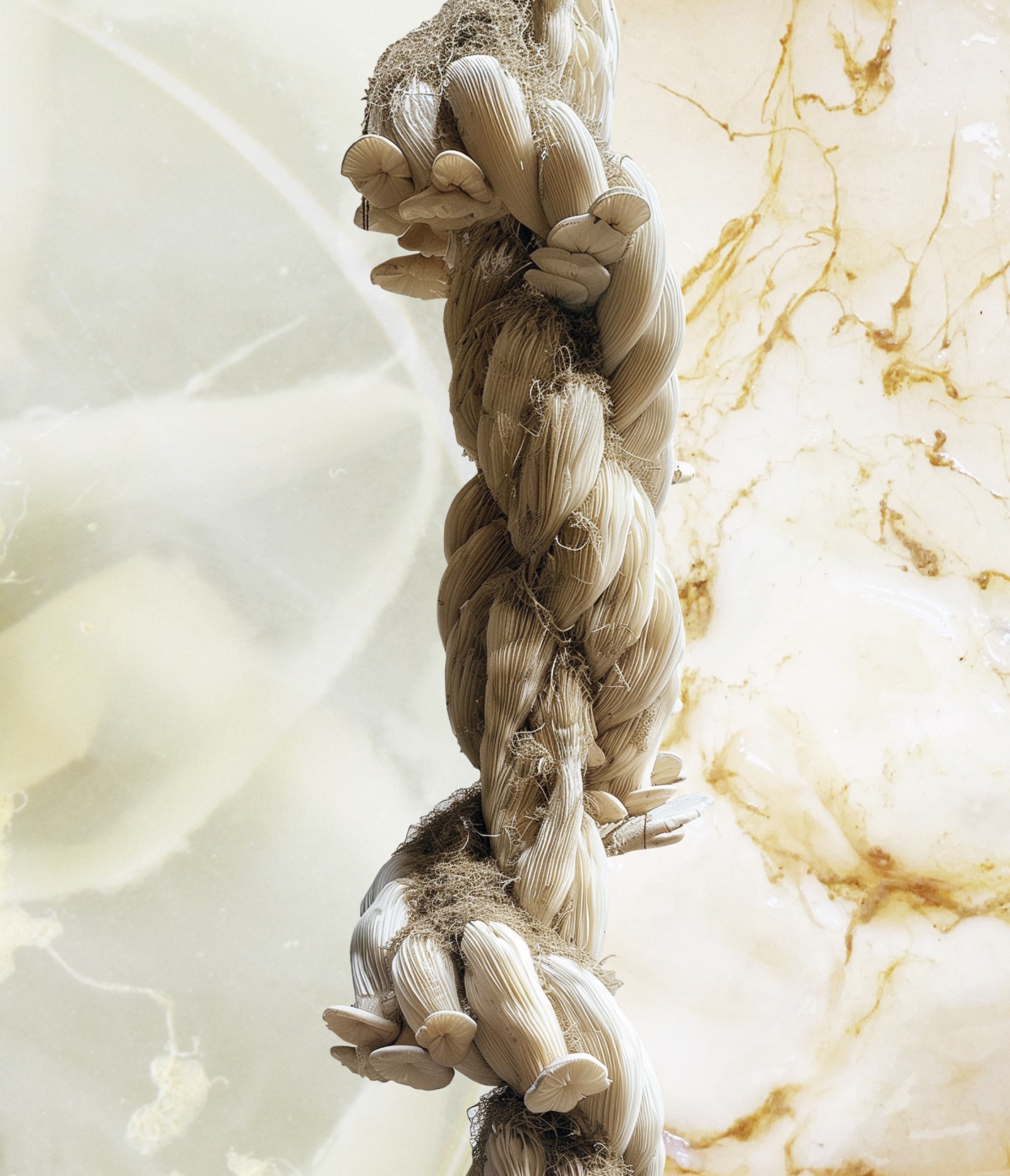
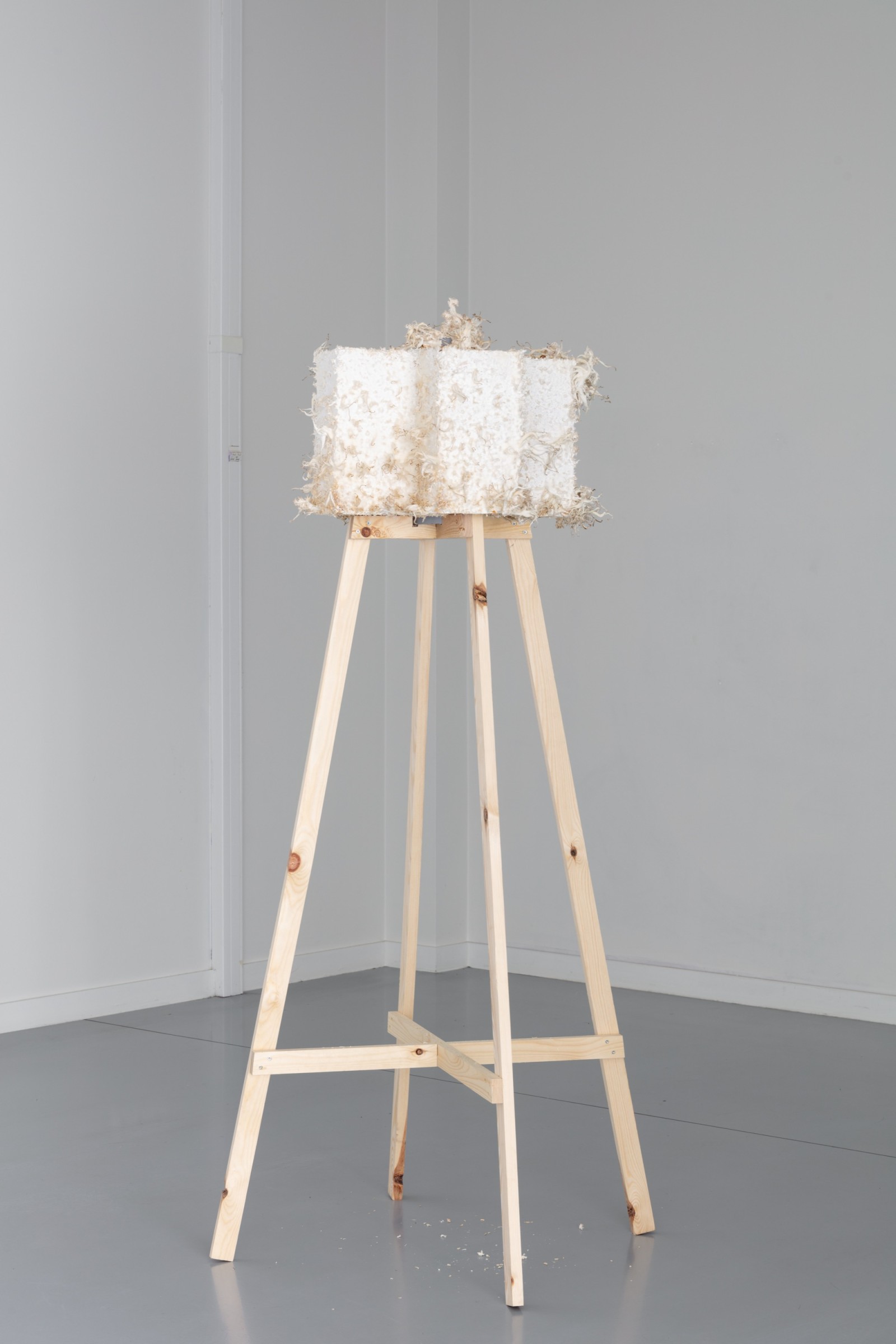
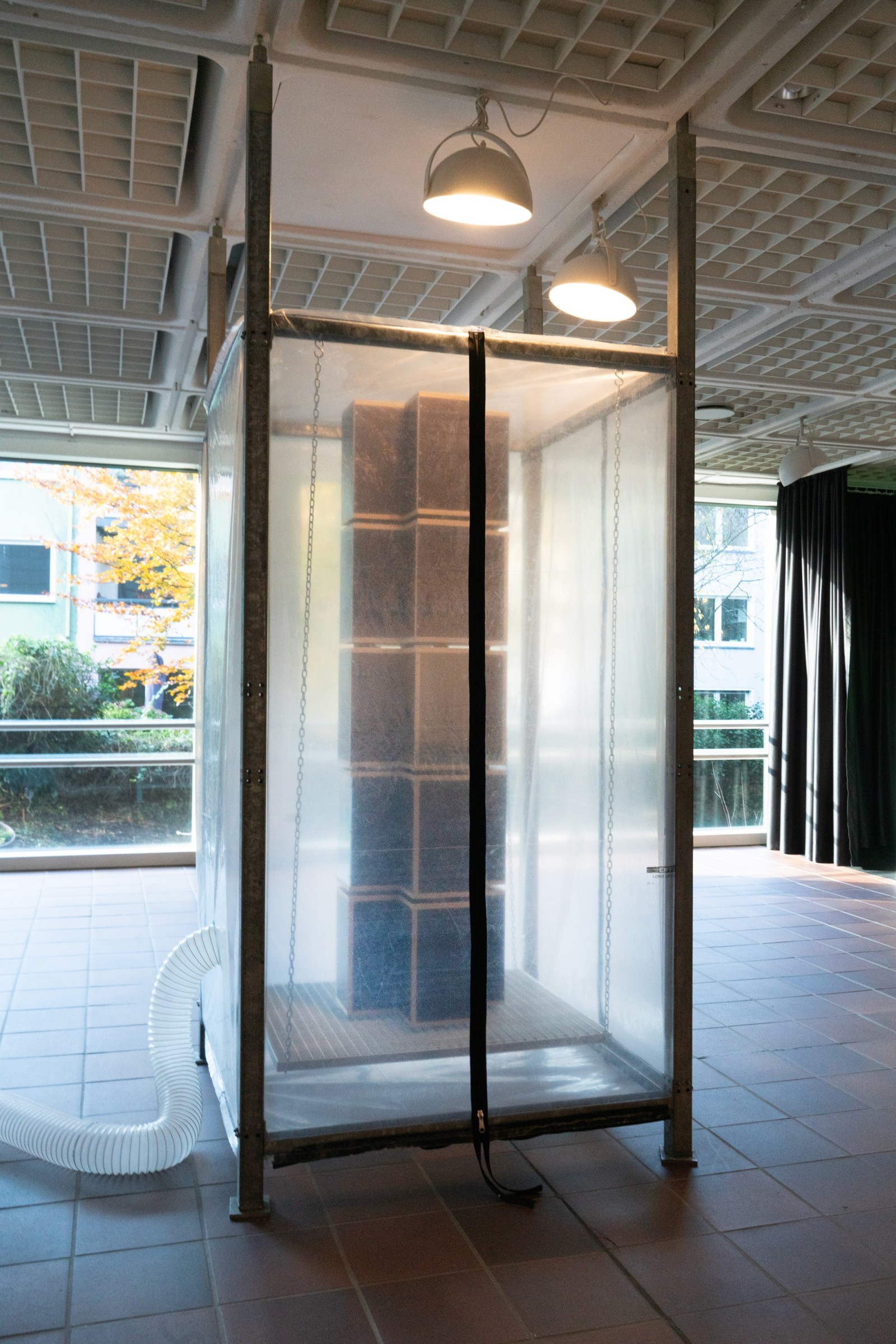
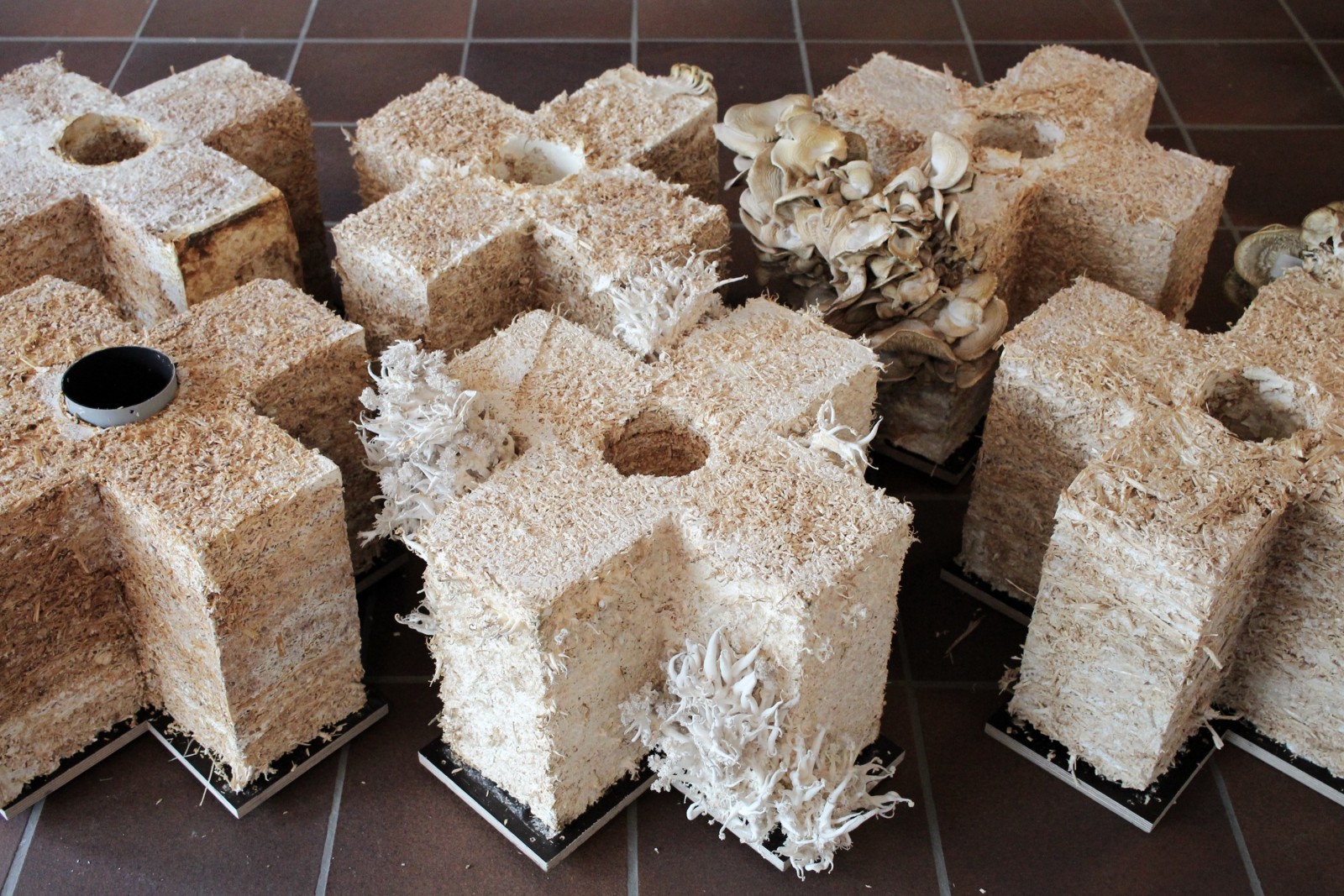
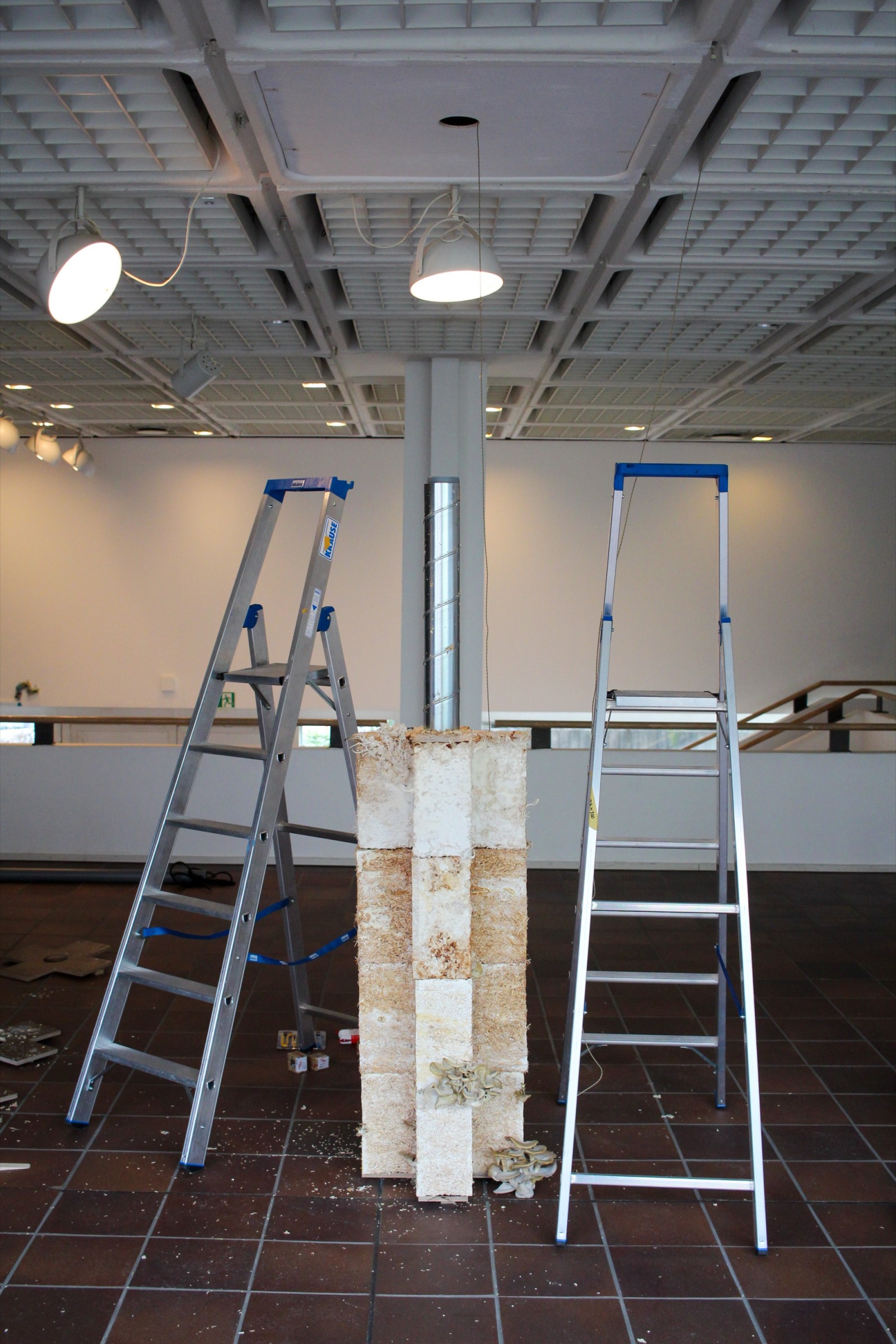
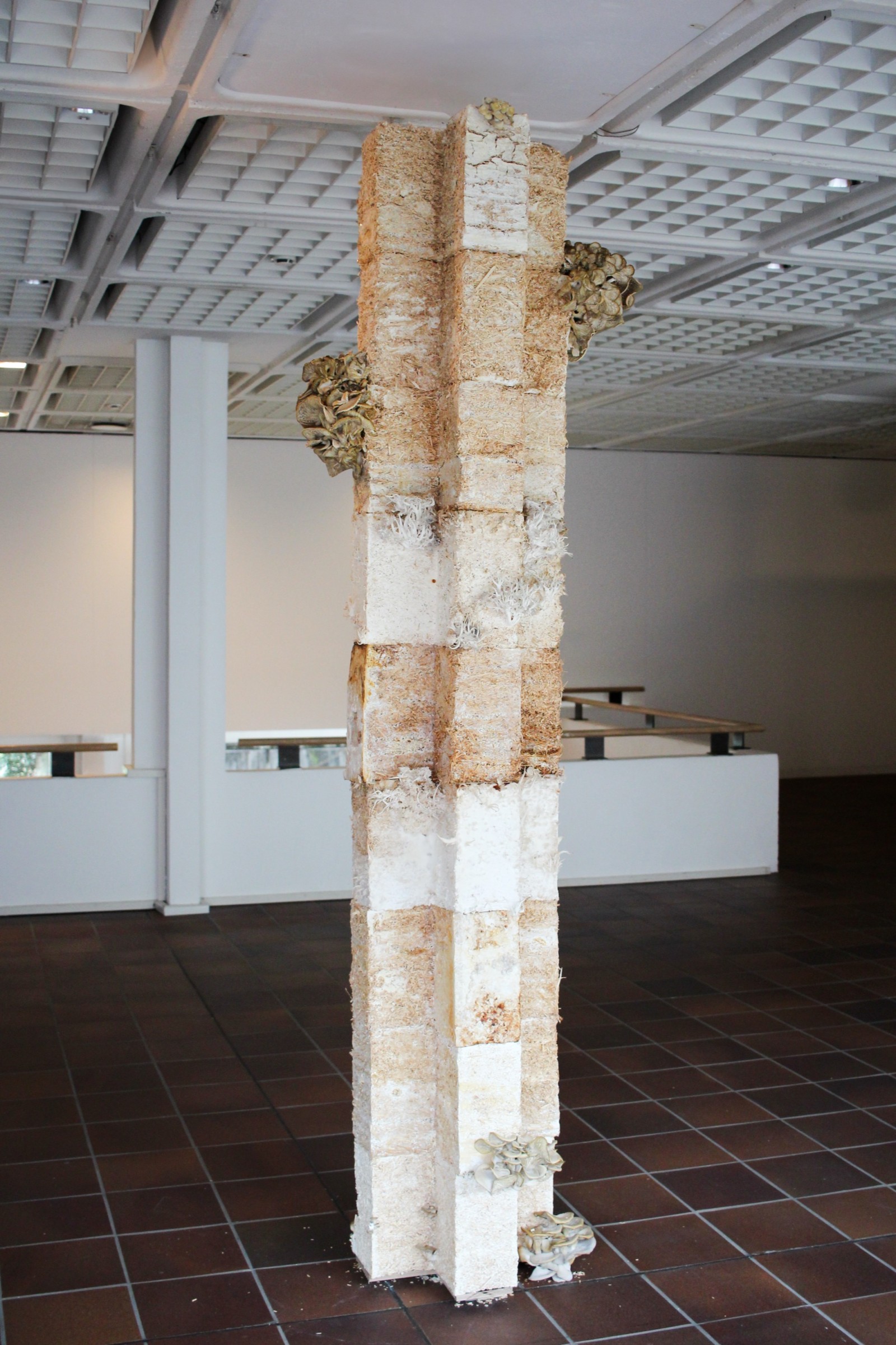
This research explores the creation of a fungal reinterpretation of a classic architectural element: the column. As one of the earliest structural supports in architectural history, the column has evolved over centuries, shaped by the changing architectural orders of ancient Greek and Roman civilizations. Each order is defined by distinct proportions, ornamental details, construction techniques, and materials—reflections of the societal transformations within specific regions and eras. These historical shifts highlight the enduring need to rethink and renew our concepts of construction.
The experimental construction is underpinned by speculation: What does it mean to erect a ruined monument? We evoke the figure of the ruin to conceive something that is not crystallized in a fixed form. The ruin speaks of the relationship between time and matter—of impermanence, of finitude in our built environment. It invites us to engage with process rather than product, with becoming rather than being.
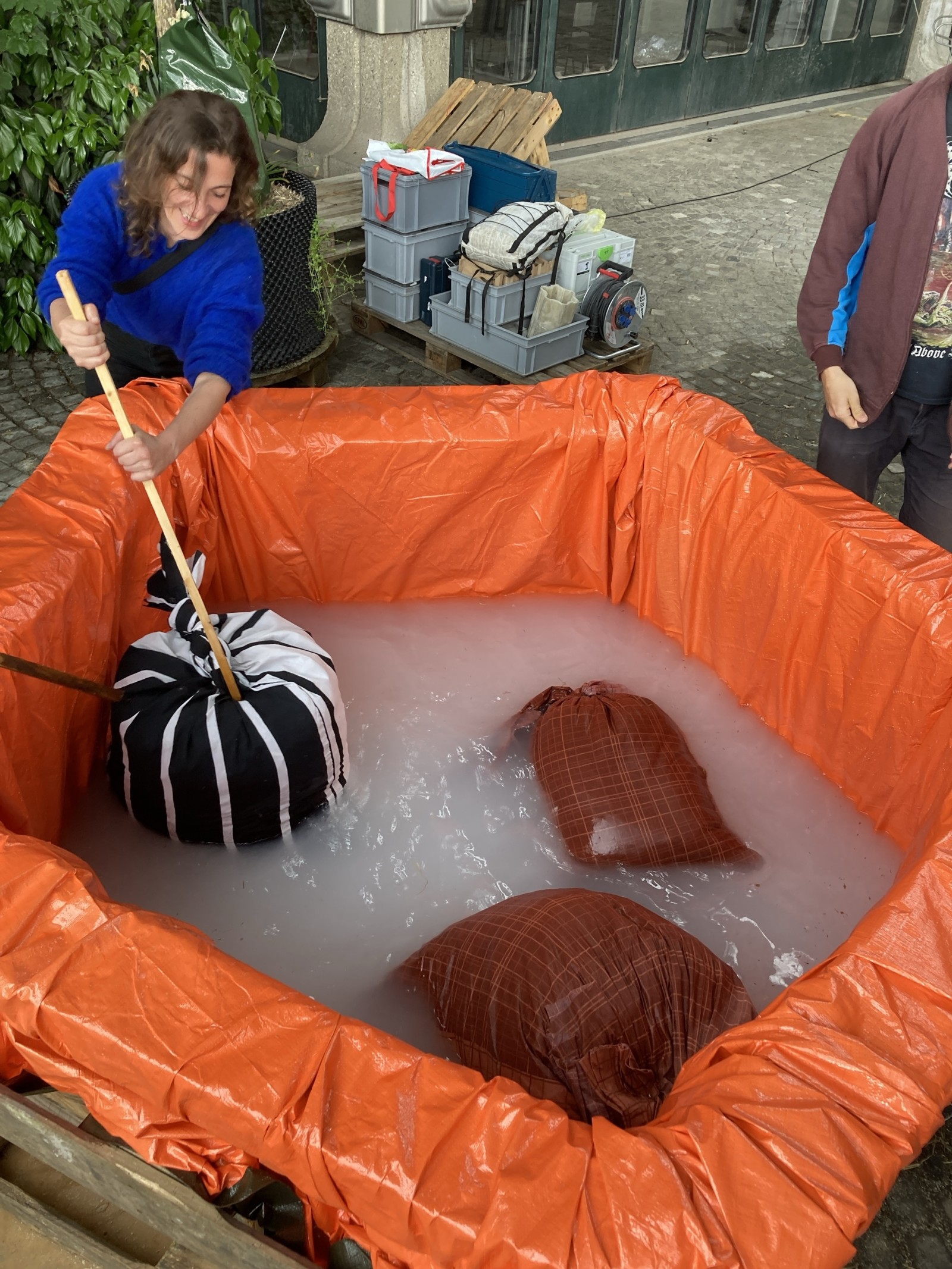
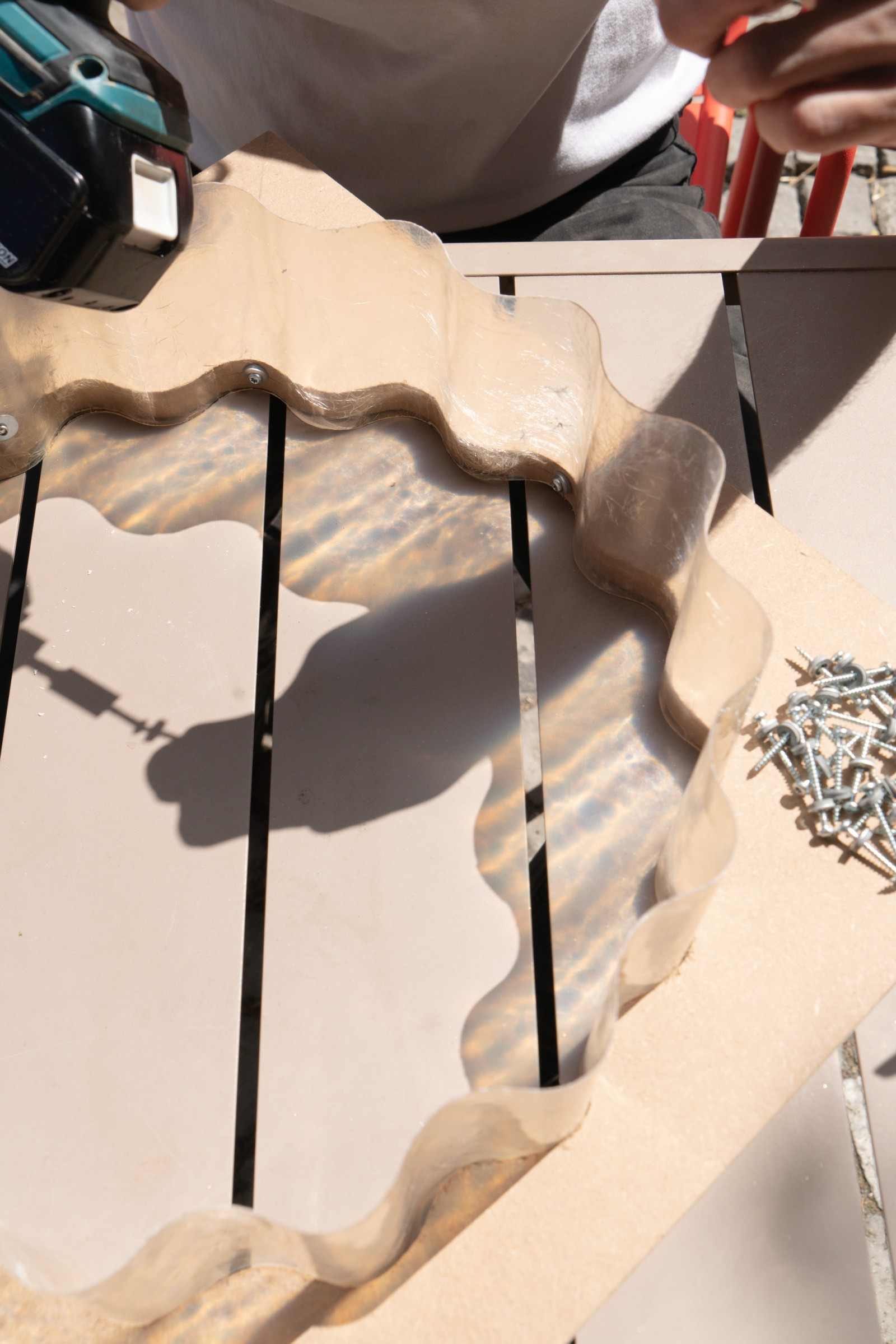
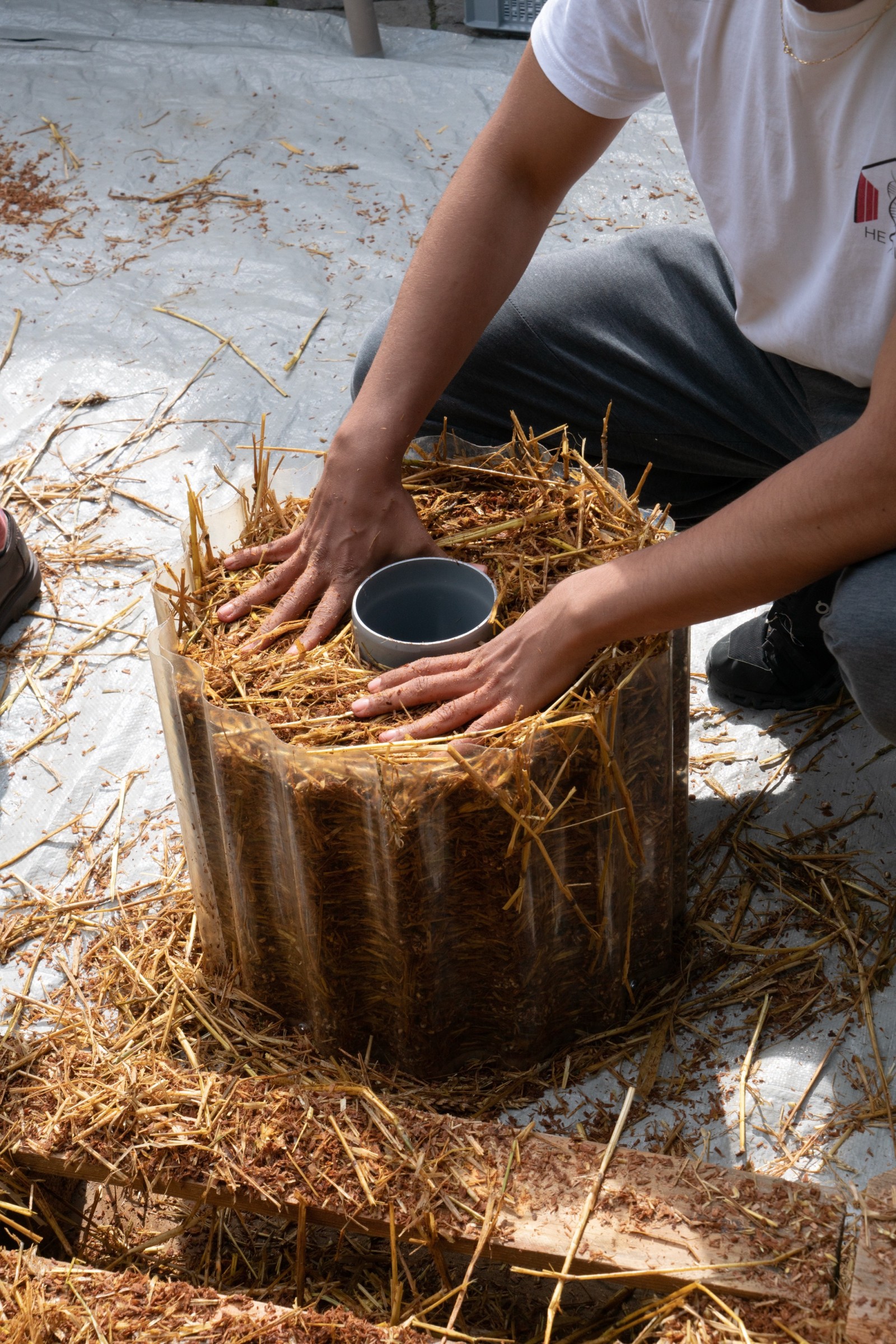
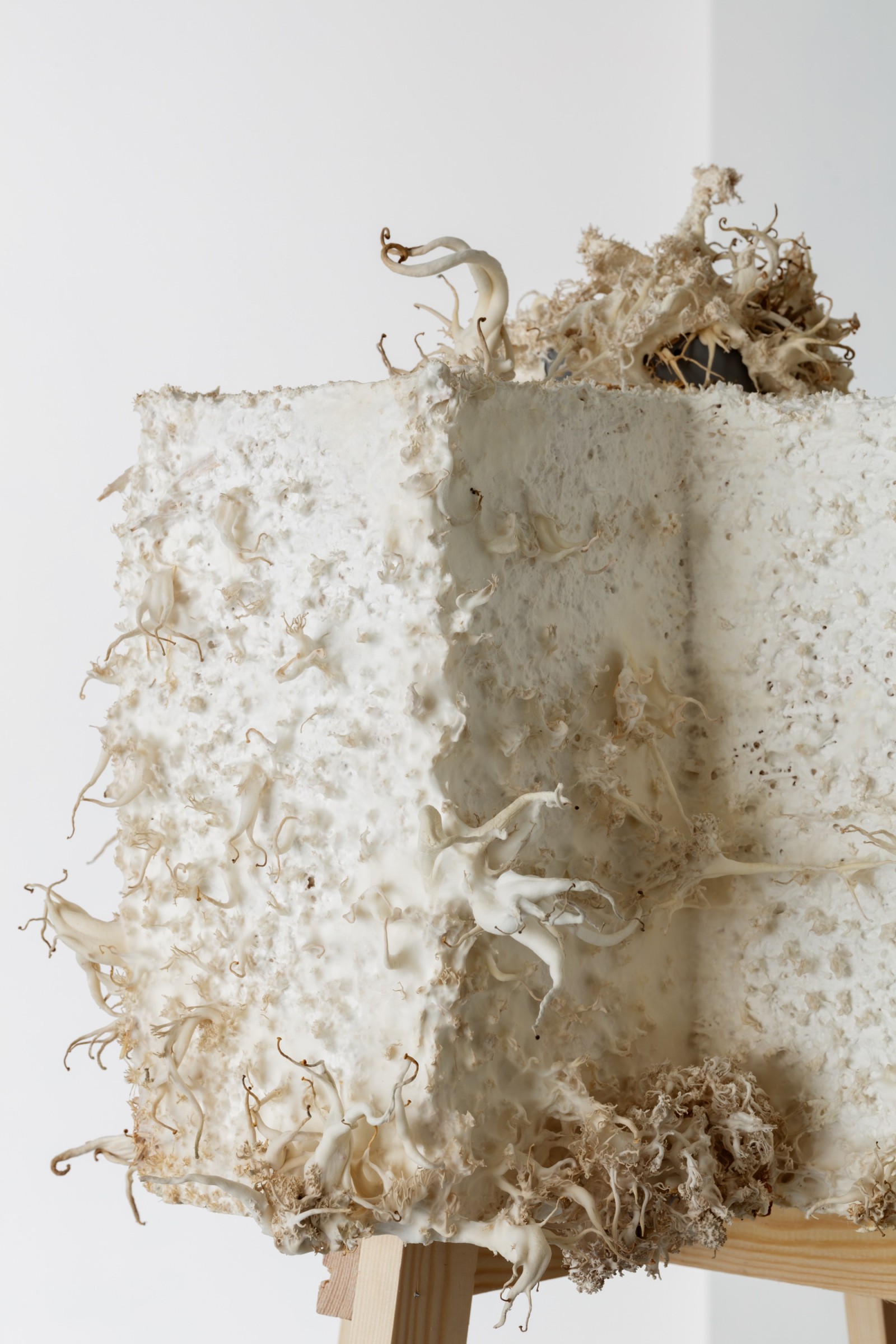
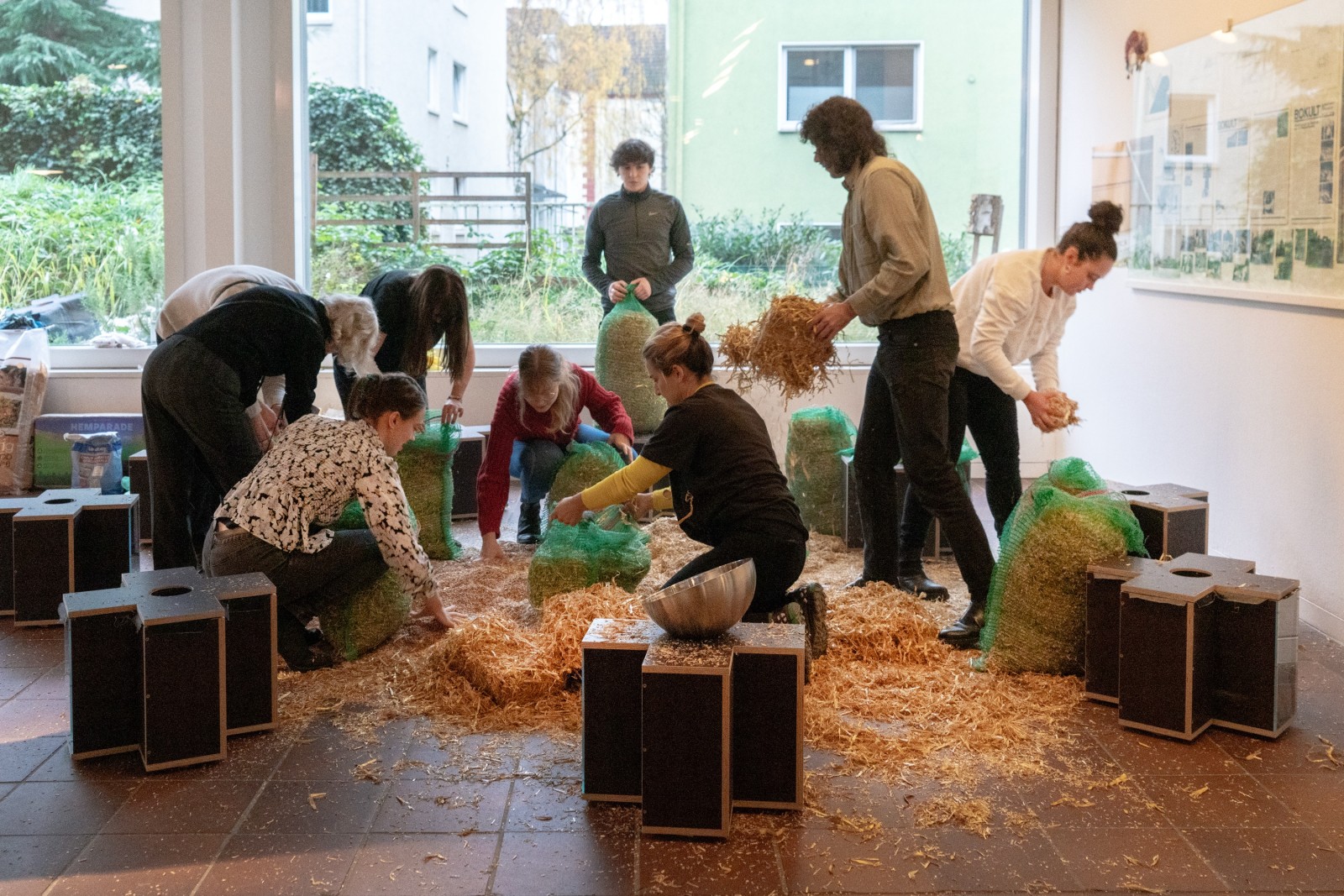
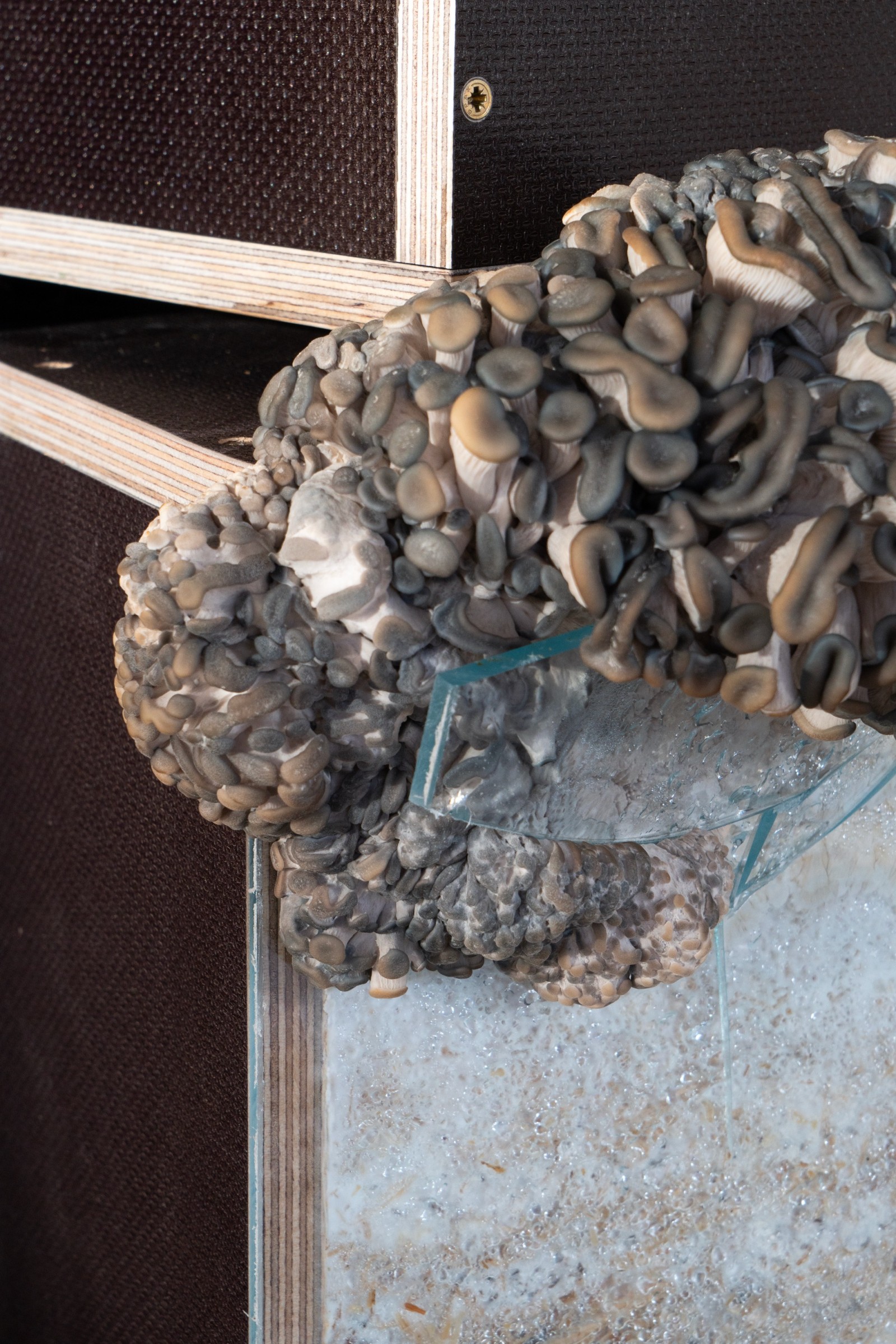
What does the life cycle of mycelium—solidifying, fruiting, drying, decomposing—imply about the act of building and the art of living? Is it a material built over time, requiring a careful gesture of moulding and demoulding? Could this give rise to a new craftsmanship—one attuned to temporal rhythms, decay, and renewal—reshaping our ‘constructed environment’?
In constant adaptation, mushrooms link past, present, and future in our relationship with the landscape. They may offer alternatives to conventional building materials, pointing toward regenerative, post-anthropocentric models of construction.
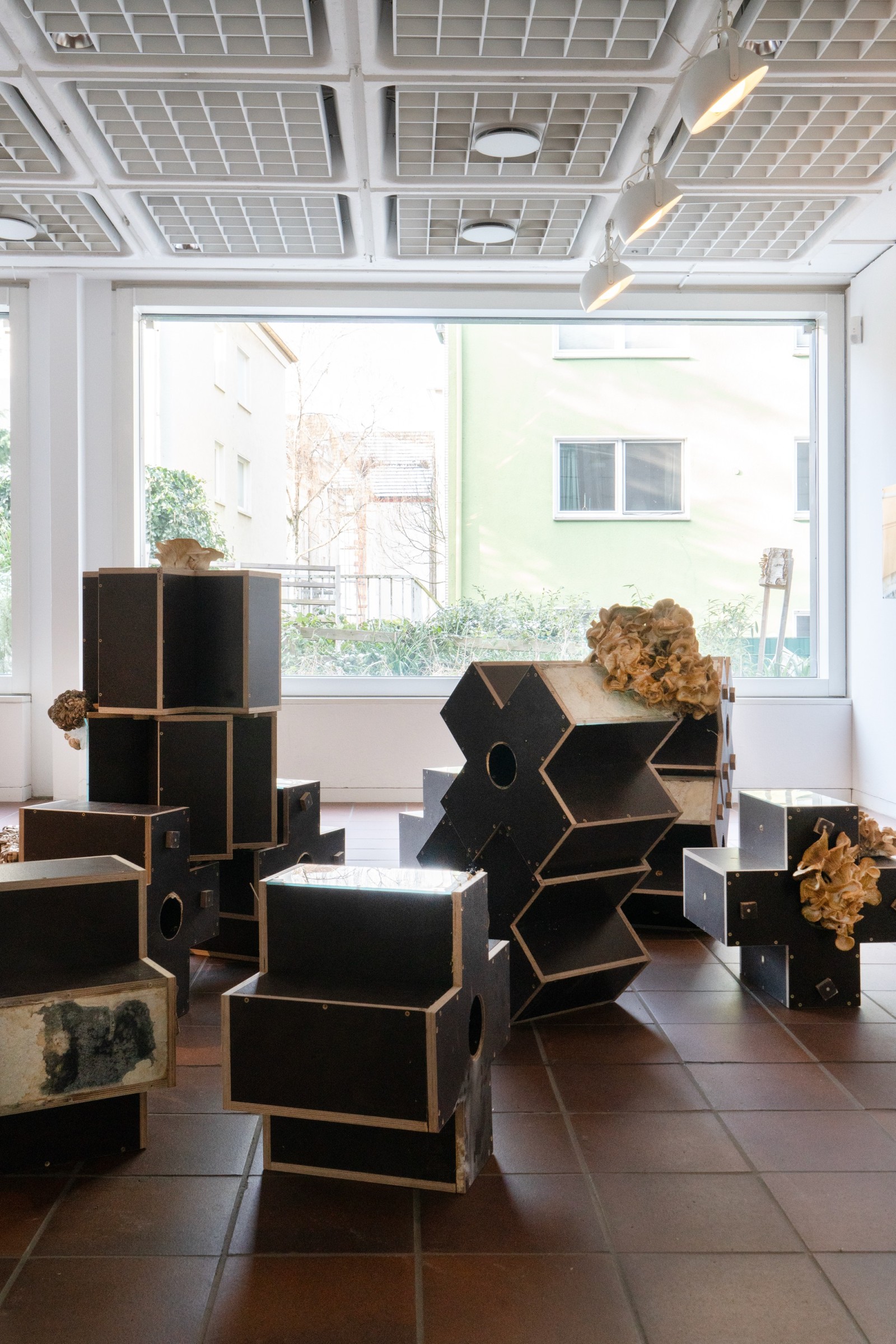
We build fertile ruins in collaboration with fungi. We imagine a monument of finitude, embedded in a metabolic cycle of composition and decomposition. We embrace mushrooming as a methodology—a way of looking at things and a way of making. We build the ruins of a theatre to come.
We build fertile ruins in collaboration with fungi. We imagine a monument to finitude, embedded in a metabolic cycle of growth and decay. We go foraging—not to gather fixed knowledge, but to learn how to read the signs of the living, to recognize what emerges, disappears, and re-emerges. Mushrooming becomes a method: a way of paying attention, of working with, of building from the ephemeral. We build the ruins of a theatre to come.
Project developed in collaboration with Sara Manente (choreographer, researcher) and Deborah Robbiano (multidisciplinary artist)
1st iteration commissioned by far° festival et fabrique des arts vivants - Nyon
2nd iteration commissioned by nadine - laboratory for contemporary arts
3d iteration commissioned by Kunstmuseum Bochum
4d iteration commissioned by Pilar - House of Art & Science at VUB Brussels
supported by Pro Helvetia – Fondation Suisse pour la culture, CDH-Culture/EPFL, kcBUDA, Kaaitheater, Fondation Erna et Curt Burgauer and the Flemish Government